





 Release time:2026.06.08
 Read volume:652
From June 3 to 5, the 12th Shanghai International Data Center Industry Exhibition & the 7th China Data Center Green Energy Conference (IDC 2026), hosted by China Data Center Committee (CDCC), grandly kicked off at Shanghai New International Expo Centre. Far East Electric showcased its full-stack AIDC infrastructure solutions, presenting a complete portfolio of self-developed advanced thermal management products including dual-new liquid cooling plates, GB300 liquid cooling systems, CDUs and liquid metal TIM materials. The display fully demonstrated its technological strengths and innovative achievements under the overall strategic layout, injecting new momentum into the high-quality development of the AIDC industry.
Currently, demands for training and inference of large AI models continue to surge. The power density of a single cabinet in intelligent computing centers has exceeded 150kW, while the power consumption of new-generation GPU chips is stepping into the 3000W era. Traditional air cooling can no longer meet the extreme heat dissipation requirements, making liquid cooling a standard solution for intelligent computing centers. Meanwhile, energy consumption ratio, temperature uniformity, operational reliability of cooling systems as well as their coordination with high-speed interconnection systems have become core bottlenecks restricting the large-scale deployment of AIDCs. The industry is in urgent need of full-stack thermal management solutions compatible with next-generation chips and balancing performance and energy efficiency.
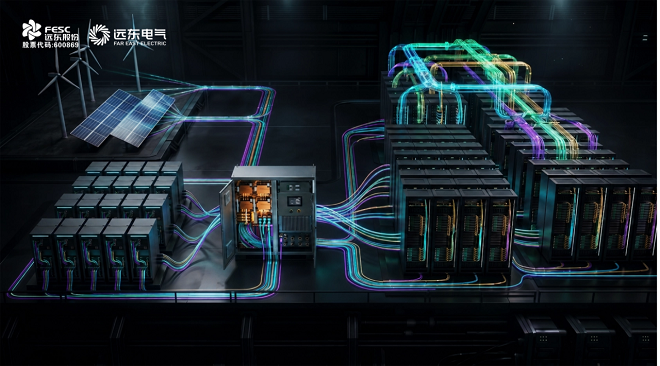
At the exhibition, Far East Electric's integrated solution combining bionic manifold microchannel liquid cooling plates and liquid metal TIM composite materials became a major highlight. It is capable of handling heat dissipation for GPUs with power over 2000W, featuring low energy consumption and excellent temperature uniformity. The solution adapts to next-generation core equipment and helps AIDCs optimize PUE. Equipped with bionic manifold microchannel and other advanced technologies, the dual-new liquid cooling plates can lower the temperature by more than 40℃ compared with conventional cooling solutions under a 2300W load. It supports customized development for Hopper/Blackwell platforms and suits the construction of various AI computing centers. In addition, the rack-mounted liquid-liquid CDU adopts a standard 4U cabinet design, fitted with redundant dual pumps and liquid leakage detection functions to ensure long-term stable operation of the cooling loop system. The integrated turnkey solution enables overall delivery and collaborative optimization, effectively addressing long-standing industry pain points such as fragmented solutions and poor component compatibility.
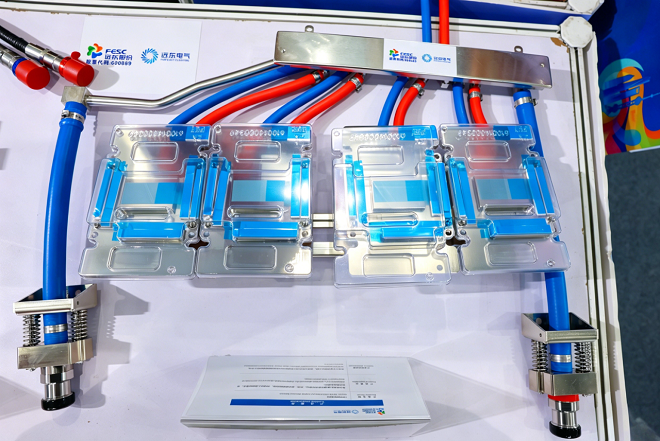
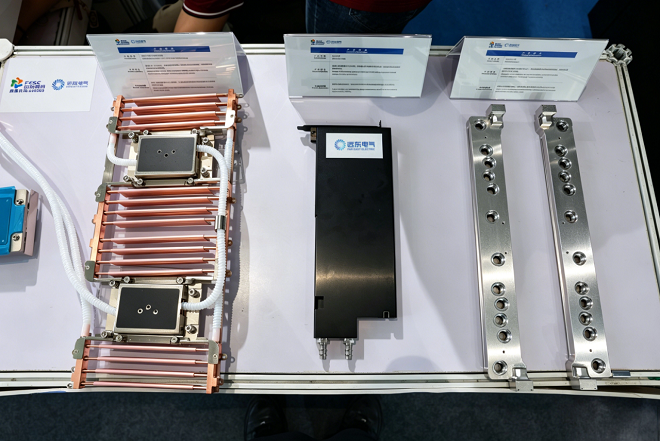
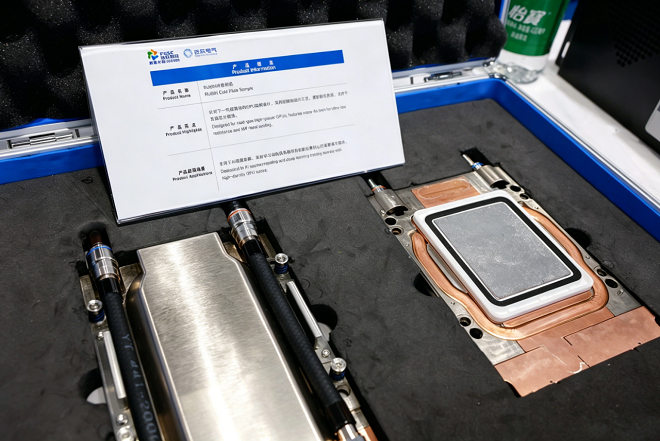
Beyond cutting-edge liquid cooling products, Far East Electric also fully presented its full-stack AIDC solutions on site. Core products including energy storage batteries, high-speed copper cables and optical fiber cables were showcased together, fully demonstrating its comprehensive capabilities covering power supply, computing operation, data transmission and thermal management. It vividly reflects the company's transformation from a single-product supplier to a full-stack solution provider.
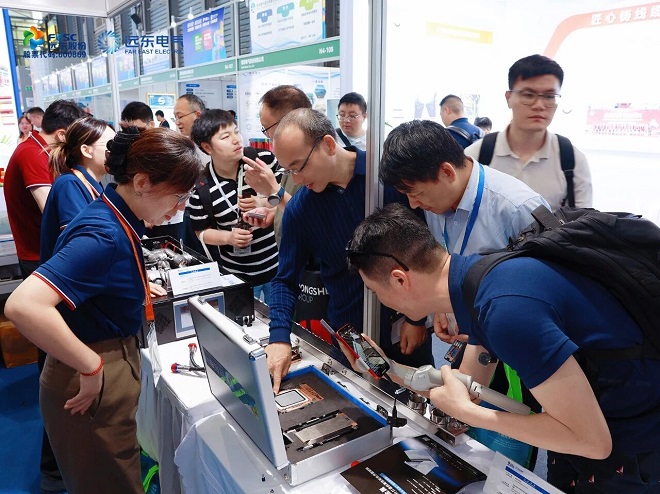
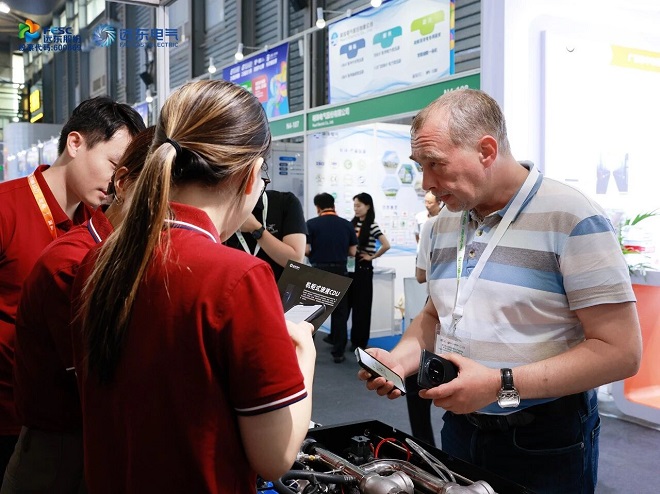
From chip-level liquid metal TIM materials to cabinet-level intelligent CDUs, and from high-speed copper & optical interconnection products to energy storage and power backup systems, what Far East Electric displayed at CDCC is not only a lineup of independently developed core products, but also its full-stack solution capabilities and industrial chain advantages that connect all links of the AIDC ecosystem.
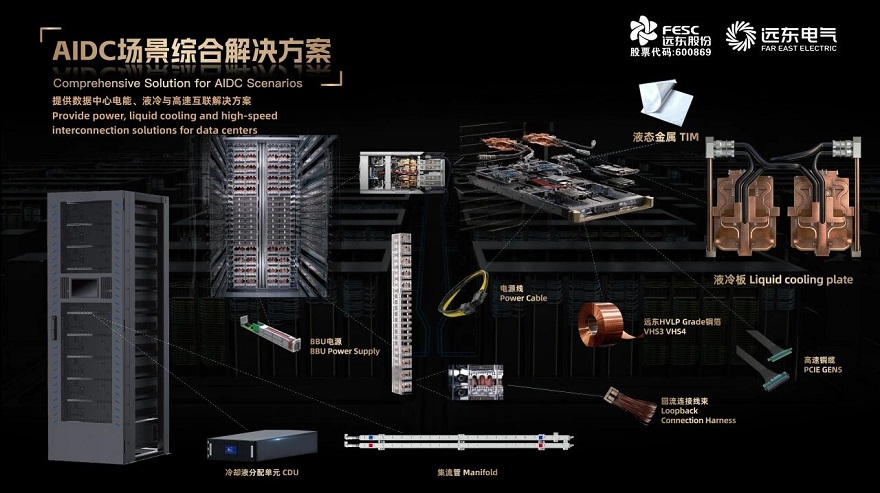
Looking ahead, Far East Electric will further deepen its layout in the AIDC industry under the strategy of "Electric Energy + Computing Power + AI". The company will focus on core technological breakthroughs, full-industry-chain integration and global service capacity building, drive intelligent computing infrastructure to become more efficient, eco-friendly and reliable, and contribute solid strength to the high-quality development of the global digital economy.
 Back to List